
Did you know that heart disease is the leading cause of death for women in the US? Yet many of us don’t prioritize our heart health until a problem arises. The good news? Small, daily choices can significantly improve your heart health - and it’s never too late to start!
As a Nurse and Health Coach, I’m passionate about helping women take proactive steps towards lifelong well-being and since February is American Heart Month, this is the perfect time to start making heart-healthy changes that fit into your daily routine.
Here are five, simple, science-backed strategies to strengthen your heart and show it some love.
1️⃣ Move Your Body Daily 💃
Regular movement is one of the most powerful ways to improve your cardiovascular health. Research shows that just 150 minutes of moderate-intensity exercise per week - about 30 minutes, five days a week - can significantly lower the risk of heart disease and stroke.
✅ Strength training (which I highly recommend!) helps build muscle, improve metabolism, and support heart health. Studies show that lifting weights just twice a week can reduce the risk of heart disease by 40-70%.
✅ Cardio workouts like brisk walking, running, cycling, or dancing improve circulation and strengthen your heart muscle.
✅ NEAT movement (Non-Exercise Activity Thermogenesis) - the calories burned through daily activities like walking, standing, and cleaning also counts! Simply moving more throughout the day reduces the risk of cardiovascular disease.
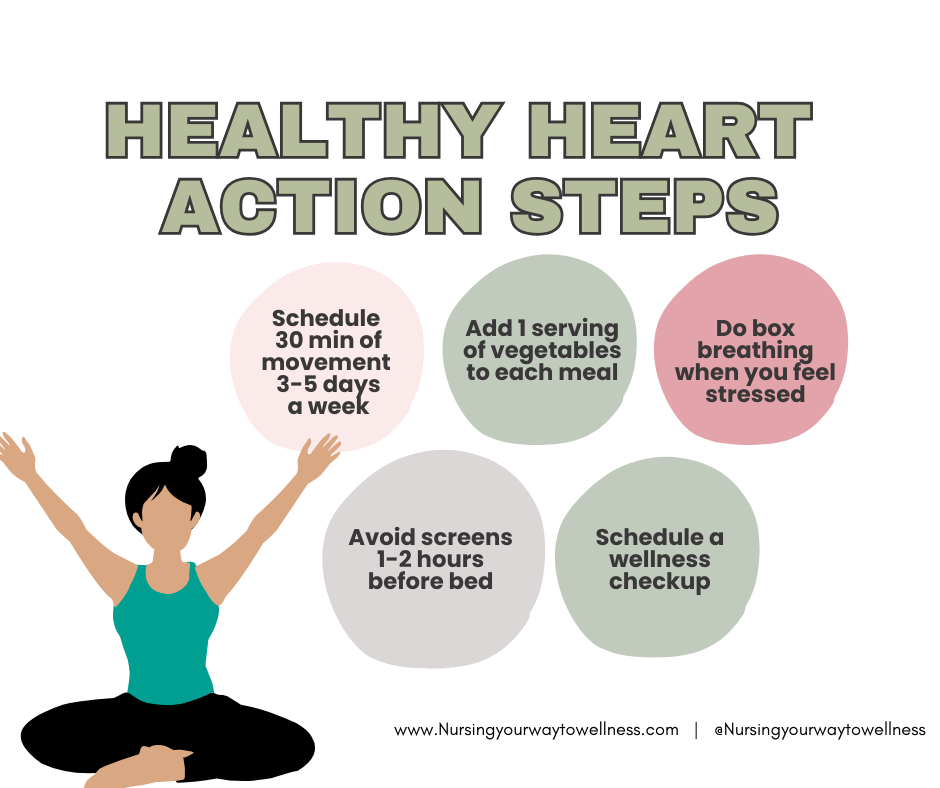
💡 Action Step: Find an activity you enjoy (whether it’s a dance session, a HIIT workout, or strength training) and aim for at least 30 minutes, 3-5 days a week.
2️⃣ Eat Heart-Healthy Foods 🥗
Nutrition plays a critical role in heart health. A diet rich in whole, nutrient-dense foods can lower blood pressure, cholesterol, and inflammation - all key factors in preventing heart disease.
✅ Follow My Healthy Plate Template: Make half your plate colorful fruits and vegetables, one-quarter lean protein, and one-quarter healthy carbohydrates.
✅ Increase Omega-3 Fatty Acids: Found in salmon, sardines, flaxseeds, chia seeds, and walnuts, omega-3s help lower triglycerides and reduce inflammation.
✅ Eat Fiber-Rich Foods: Whole grains, legumes, and leafy greens support heart health by reducing cholesterol levels and improving gut health.
💡 Action Step: Add one extra serving of vegetables to your meals and swap processed snacks for heart-healthy options like nuts, seeds, or Greek yogurt.
3️⃣ Manage Stress & Support Your Nervous System 🧘♀️
Chronic stress is a major contributor to heart disease, increasing inflammation and raising blood pressure. But intentional stress management techniques can counteract these effects.
✅ Deep breathing and meditation lower cortisol levels and activate the parasympathetic nervous system.
✅ Journaling or practicing gratitude reduces anxiety and improves heart rate variability.
✅ Spending time in nature has been shown to lower heart rate and blood pressure.
💡 Action Step: Try box breathing (inhale for 4, hold for 4, exhale for 4, hold for 4) for 3-5 minutes when you feel stressed.
4️⃣ Prioritize Sleep for a Healthy Heart 💤
Poor sleep is linked to higher blood pressure, increased inflammation, and a greater risk of heart disease. Women need 7-9 hours of quality sleep each night for optimal heart health.
✅ Stick to a bedtime routine: Aim to wake up and go to bed at the same time each day to regulate your circadian rhythm.
✅ Reduce blue light exposure: Avoid screens 1-2 hours before bed to improve melatonin production.
✅ Create a relaxing wind-down routine: Try reading, stretching, or sipping herbal tea to signal to your body that it’s time to rest.
💡 Action Step: Set a sleep alarm to remind you to start winding down 30-60 minutes before bed.
5️⃣ Know Your Numbers & Stay on Top of Health Screenings 👩⚕️
Regular check-ups can help detect early signs of heart disease before they become serious. Knowing your numbers gives you the power to take proactive steps.
✅ Blood pressure: Ideal range is <120/80 mmHg.
✅ Cholesterol levels: Get a full lipid panel, including LDL particle size, to get the full picture.
✅ Blood sugar levels: Monitor HbA1C, fasting glucose, and insulin to assess metabolic health.
✅ Inflammation markers: HS-CRP and homocysteine can indicate early heart disease risk.
💡 Action Step: Schedule a wellness check-up to review your heart health markers and discuss lifestyle changes with your healthcare provider.
Remember: Start Small, Stay Consistent & Love Your Heart ❤
Caring for your heart doesn’t have to be overwhelming. Small, consistent changes add up over time and can dramatically improve your overall well-being.
💡 Which of these heart-healthy habits are you focusing on this month? Comment below or share with a friend to spread the love!
